Self-Ordering Kiosks for Restaurants: A Smart Investment Guide for Modern Operators
Introduction
Walk into almost any McDonald's, Burger King, or Shake Shack today and the first thing you encounter isn't a cashier — it's a sleek touchscreen terminal. Self-ordering kiosks for restaurants have moved decisively from novelty to necessity. Driven by rising labor costs, post-pandemic shifts in consumer behavior, and demonstrable revenue uplifts, the restaurant kiosk for restaurants market is growing fast. The global self-service kiosk market reached approximately $34.4 billion in 2024 and is forecast to expand at a compound annual growth rate (CAGR) of 10.9% through 2030 (Grand View Research, 2024). For operators still weighing the decision, this guide cuts through the noise with evidence-based analysis of use cases, financial outcomes, implementation realities, and the security considerations every decision-maker needs to understand.
Where Self-Service Kiosks Are Making an Impact
The self-service kiosk for restaurants applies across a wide range of formats and service models, not just fast food giants.
Quick-Service Restaurants (QSRs): This is the most mature and data-rich use case. Chains like McDonald's and Burger King have deployed kiosks systemwide, using them to manage high-volume ordering during peak hours while freeing staff to focus on food preparation and hospitality. A California Burger King franchisee accelerated kiosk rollouts across 140 locations in direct response to rising minimum wage legislation — a clear signal that cost management is as important a driver as customer experience (Restroworks, 2025).
Fast-Casual Dining: Concepts in the fast-casual tier — think customizable bowls, burritos, and Asian fusion — benefit especially from kiosks' ability to handle complex order customization without creating bottlenecks. Customers can navigate large menus and modifier options at their own pace, which reduces errors and improves satisfaction.
Cafeterias and Food Halls: High-volume institutional environments such as university dining halls, airport food courts, and corporate cafeterias increasingly deploy restaurant self-ordering kiosks to process large numbers of transactions quickly and reduce the staffing burden during compressed lunch windows.
Independent and Mid-Sized Operators: Contrary to the perception that kiosks are exclusively an enterprise play, smaller operations often see the most pronounced impact. When staff are limited and every order matters, a well-placed restaurant self-service kiosk can handle transaction volume during rushes without adding to the payroll — and smart upselling built into the interface compounds the financial benefit.
The Business Case: Key Benefits
The strongest case for adopting a restaurant self-ordering kiosk rests on four well-documented pillars.
1. Faster Order Processing and Reduced Wait Times: Research consistently shows that self-service technology reduces total order time by up to 40% — a critical advantage during peak lunch and dinner rushes (Restroworks, 2025; Bite Blog, 2025). This speed improvement doesn't just move customers through faster; it also enables restaurants to serve more guests within the same physical footprint without expansions or renovations. A study cited by Appetize found that customers actively prefer a kiosk when a manned line exceeds four people — meaning the technology directly addresses the point of maximum frustration.
2. Higher Average Order Values: Digital interfaces are remarkably effective at upselling. Without the social pressure of a cashier interaction, customers are more inclined to explore add-ons, premium options, and meal upgrades. The data is consistent: average ticket sizes at kiosks are typically 12–20% higher than counter orders, with some restaurants reporting uplift as high as 30% (Forbes; Modern Restaurant Management). McDonald's has reported that customers using kiosks spent meaningfully more per order, contributing to a 30% rise in average check size (Restroworks, 2025). At a Samsung-studied taqueria, 8.2% of kiosk users added a prompted item, lifting average ticket price by $6.73. At a ramen restaurant in the same study, 12.7% of customers added suggested items, raising basket value by over 30% (Samsung Business Insights, 2024).
3. Improved Order Accuracy: Ordering errors are costly — in wasted food, staff time, and customer goodwill. An InTouch Insight evaluation found that 98% of kiosk users could easily customize their orders, and 76% of kiosk-enabled restaurants report measurable improvements in order accuracy (Bite Blog, 2025). When customers enter their own specifications and review before submitting, the chain of miscommunication between customer, cashier, and kitchen is shortened significantly.
4. Labor Optimization: With 45% of restaurant operators reporting they need more staff to meet demand (National Restaurant Association, 2024), kiosks provide a practical buffer. Rather than replacing workers, the most successful deployments redeploy staff from transactional roles — cashiering — toward guest experience, food prep, and quality control. This shifts the value of human labor to where it genuinely matters to customers.
Implementation Considerations
Deploying a self-service kiosk for restaurants is not a plug-and-play exercise. Operators who extract the greatest value from these systems approach implementation with careful planning across several dimensions.
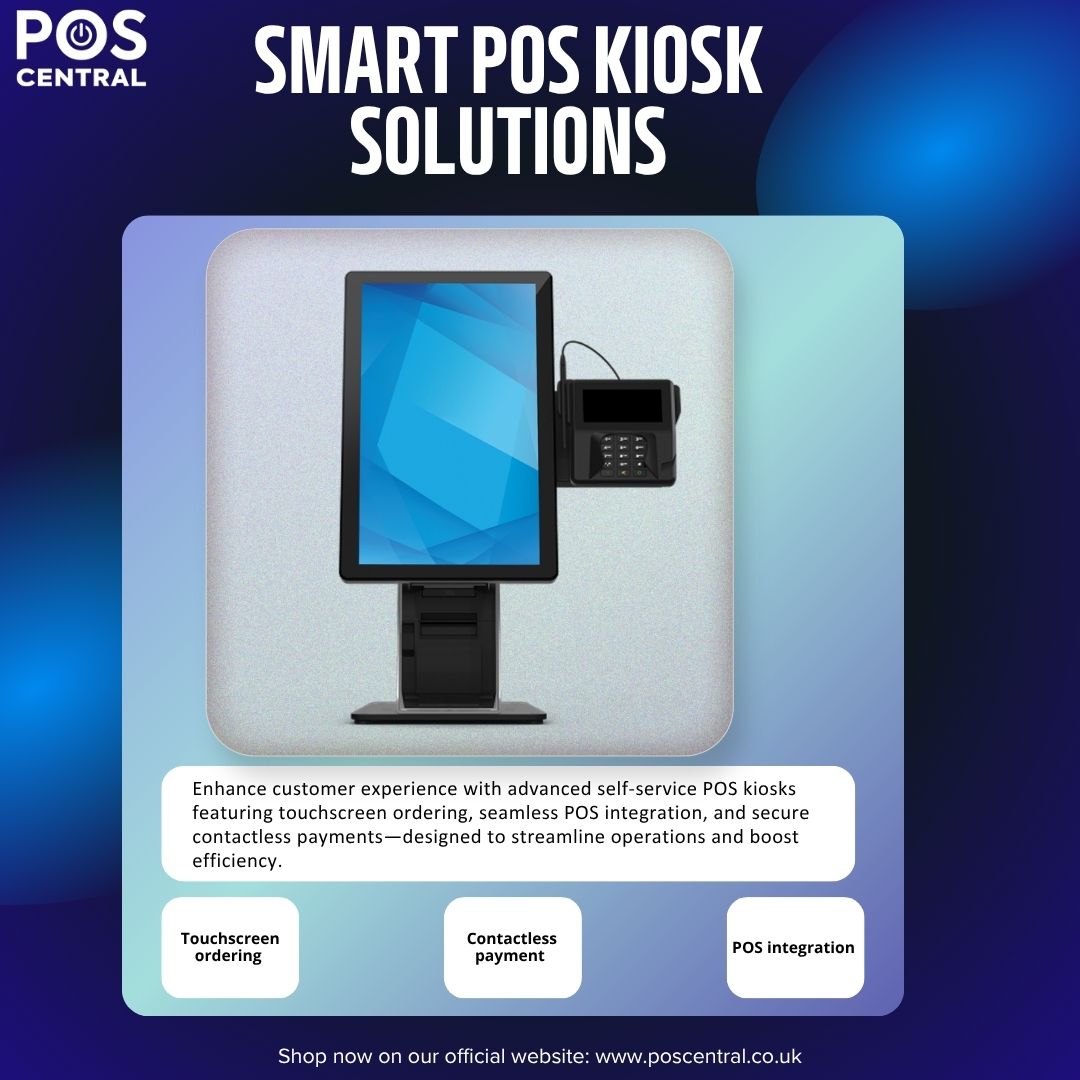
Upfront Investment and Vendor Selection: Hardware costs for a restaurant self-service kiosk typically range from $1,800 to $5,000 per unit, depending on screen size, build quality, and software bundling (EZ-Chow, 2025). Multi-unit operators can negotiate volume discounts. Beyond hardware, evaluate vendors on POS integration depth, cloud manageability, software update frequency, and the quality of analytics dashboards. Open, API-driven platforms avoid proprietary lock-in and give operators the flexibility to evolve their tech stack.
POS and Menu Integration: A kiosk is only as effective as its integration with the kitchen and back-office systems. Real-time inventory syncing prevents customers from ordering items that are unavailable. Menu updates — including time-of-day pricing, daily specials, and 86'd items — should propagate instantly to all kiosk terminals. Tight POS integration also enables the analytics that power smarter upselling and menu engineering decisions over time.
Staff Training and Change Management: The human side of a kiosk rollout is frequently underestimated. Staff need to be trained not just on how the technology works, but on how to guide hesitant customers and handle exceptions — dietary requests that fall outside the digital menu, accessibility needs, and technical issues. Operators who position kiosks as tools that free employees to focus on hospitality, rather than as replacements for people, tend to achieve smoother rollouts and higher staff buy-in.
Accessibility and Inclusivity: ADA compliance is not optional. Quality kiosk deployments include adjustable-height or angled mounting options, audio assistance, and multilingual interfaces. Expanding language support also serves diverse customer bases in a practical business sense — it expands the addressable audience for every location.
Security and Privacy: The Risks Operators Must Address
As restaurant technology ecosystems grow more connected, cybersecurity has become a board-level concern. Self-ordering kiosks collect payment data, potentially store customer preferences, and connect to cloud infrastructure — each of which represents an attack surface that must be actively managed. The foodservice industry has experienced significant breaches in recent years. In 2024, Panda Restaurant Group experienced unauthorized access to internal systems exposing employee data, while Krispy Kreme suffered a cyberattack that disrupted online ordering (Restaurantware, 2025). The average cost of a data breach across industries reached $4.88 million in 2024 — and for restaurant brands, total exposure including regulatory fines and reputational damage can climb far higher (Cloud Computing & SaaS Awards, 2025). For kiosk deployments specifically, operators should prioritize:
- PCI-DSS compliance for all payment processing, including end-to-end encryption of card data.
- Regular firmware and software patching — unpatched systems are a primary attack vector.
- Physical security measures to prevent skimmer installation or hardware tampering at the terminal.
- Zero-trust network architecture so that a compromised kiosk cannot serve as an entry point to broader restaurant systems.
- Staff training to recognize phishing and social engineering, which remain the leading causes of credential theft (Secureframe, cited in Bar & Restaurant, 2024).
Privacy compliance is also an evolving obligation. In California, litigation under the California Invasion of Privacy Act has targeted businesses whose third-party software captures customer interaction data without clear consent (Kirkland & Ellis, 2025). Operators collecting loyalty data, order history, or behavioral analytics through kiosks should work with legal counsel to ensure transparency notices and opt-in mechanisms are robust and jurisdiction-appropriate.
Conclusion
Self-ordering kiosks for restaurants have crossed the threshold from emerging technology to operational standard. The data across order accuracy, average check size, throughput speed, and customer preference consistently favors adoption. But technology alone doesn't deliver results — thoughtful implementation, robust security practices, and ongoing analytics-driven optimization are what separate restaurants that see transformative ROI from those that see a kiosk gathering dust near the entrance.
For restaurant owners and operators evaluating their next move, the question is no longer whether to invest in a restaurant self-ordering kiosk, but how to deploy it strategically. Start with a high-traffic location, measure rigorously, and build from there. The evidence base is clear: the operators who act thoughtfully and early will compound the advantage over those who wait.
Read more:
